Some cities are visited. Varanasi is felt. Watch the sun rise over the Ganga, hear temple bells at dawn, and see why pilgrims have walked these ghats for thousands of years
Varanasi: Where Faith, History, and the Ganga Meet
Varanasi is one of the oldest living cities on Earth, older than most nations that exist today. Hindus call it Kashi, the city of light. Others simply call it Banaras.
People come here for different reasons. Some come to pray. Some come for history. Many come for both. Our Varanasi Tour Packages are built for every kind of traveler, from first-time visitors to those returning for a deeper look.
We ensure your Varanasi tour is worth visiting, from its ties to Lord Shiva to its ghats along the Ganga. You’ll also find its food, its festivals, and a short trip to Ayodhya, birthplace of Lord Rama..
Private guides
Flexible dates
No Hidden Charges
AC vehicles
Real 5-star reviews
Why Varanasi Matters: A City Built Around Faith
Varanasi holds a central place in Hindu belief. It is considered one of the holiest cities in India, closely associated with Lord Shiva. Hindus believe Shiva has watched over this city since it began.
At its heart sits the Kashi Vishwanath Temple, home to one of the twelve Jyotirlingas of Shiva found across India. Millions of pilgrims visit this temple every year. Many believe dying in Varanasi, or having ashes immersed in the Ganga here, brings moksha, freedom from the cycle of rebirth.
In 2021, the Kashi Vishwanath Corridor opened, connecting the temple directly to the Ganga ghats. You can check current visitor details on the Uttar Pradesh Tourism website, the state’s official tourism portal.
Walking through Varanasi feels different from walking through most Indian cities. Temples sit beside tea stalls. Priests walk past students. Life and prayer happen on the same street, at the same time.
Kaal Bhairav Temple: The Guardian of Kashi
No visit to Varanasi feels complete without Kaal Bhairav. Local belief holds that he is the Kotwal, or guardian, of the city.
Tradition says no one can enter or leave Varanasi without his permission. Many pilgrims visit this temple first, before Kashi Vishwanath, and again before leaving the city.
The temple’s deity isn’t a full idol. Kaal Bhairav is shown as a silver face, garlanded with a string of skulls. It’s a reminder of his role as a fierce protector, not a gentle one.
Tuesdays and Sundays draw the largest crowds, with devotees offering oil, black sesame seeds, and flowers. You can check verified details on the Kashi district government portal.
Kaal Bhairav sums up something true about Varanasi. The city holds both mercy and discipline, creation and destruction, side by side.
A City Older Than History
Mark Twain once described Varanasi as “older than history, older than tradition, older even than legend, and looks twice as old as all of them put together.” Walk through the old city, and that line still feels accurate.
Varanasi is often described as one of the oldest continuously inhabited cities in the world. Temples here have been rebuilt many times over the centuries, yet the rituals inside them have barely changed. Scholars have studied Sanskrit and Hindu philosophy here for generations, especially around Banaras Hindu University, one of India’s largest residential universities.
This mix of the ancient and the everyday is what surprises most first-time visitors. Morning prayers happen at sunrise. Students walk to class an hour later. Nothing here feels staged for tourists.
The Ganga Ghats: Sunrise Boat Rides and the Evening Aarti
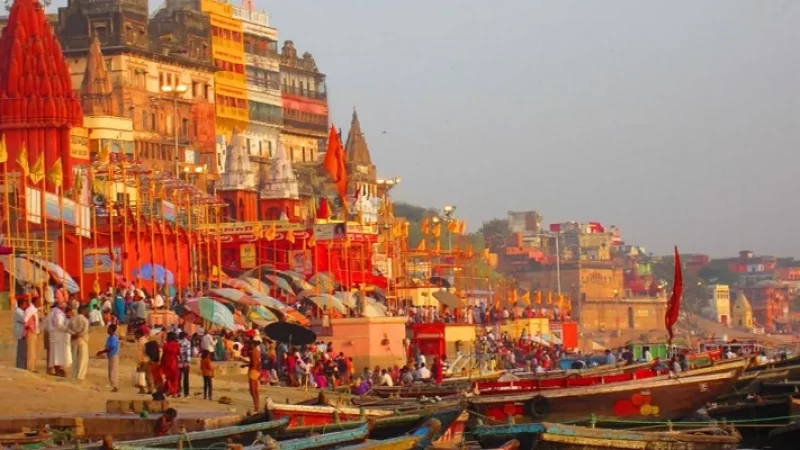
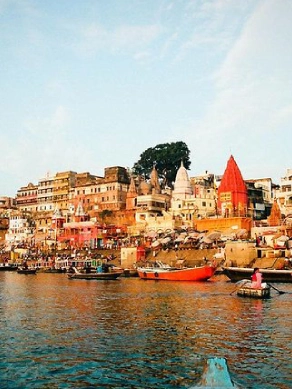
Varanasi has 84 ghats, stone steps that lead down to the Ganga River. Each one has its own history. Some are used for bathing and prayer. A few are reserved for cremation rites.
Sunrise on the water
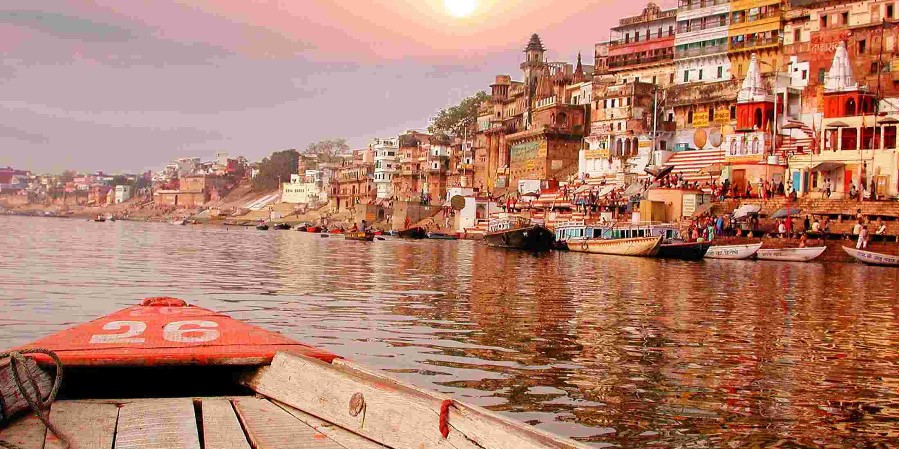
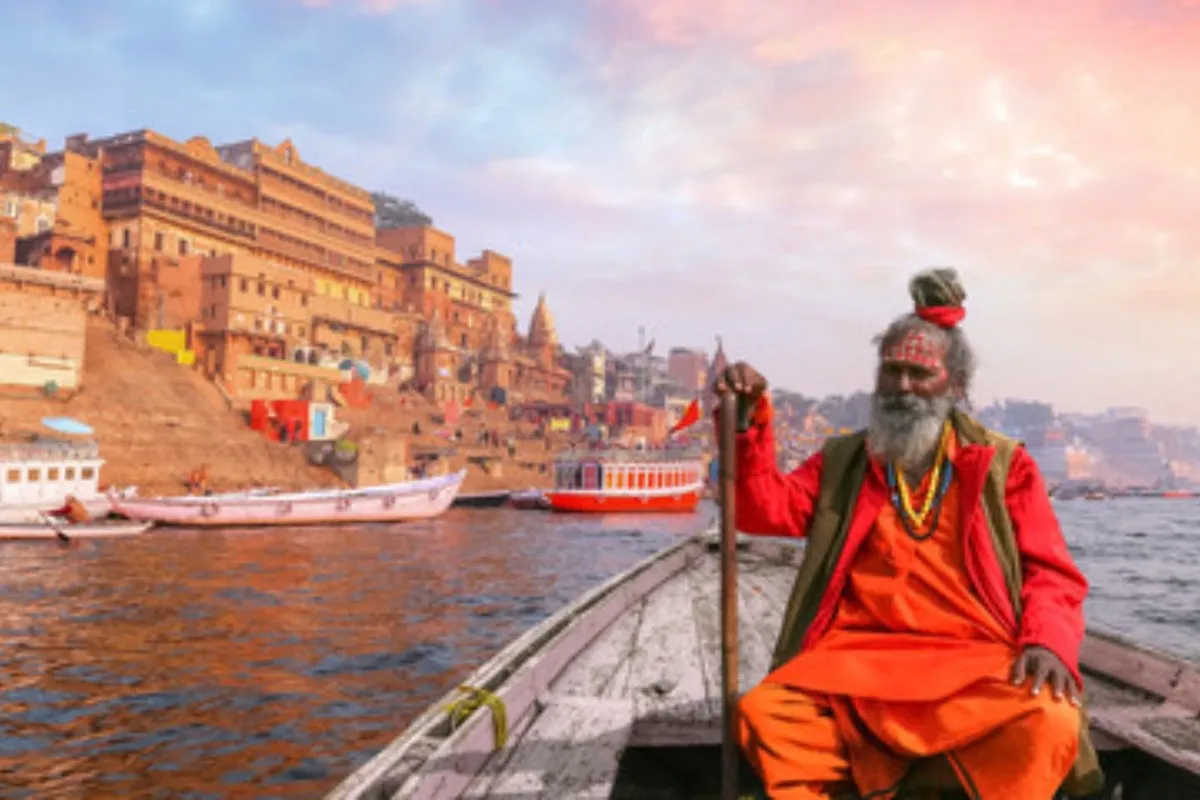
Early morning is when Varanasi looks its best. Mist sits low over the Ganga before sunrise. The water turns soft pink, then gold, as the sun clears the far riverbank.
From a wooden boat, you’ll watch the city wake up slowly. Priests wade in for their morning prayers. Temple bells start ringing, one after another, down the ghats. A few boats drift past carrying marigold flowers and floating lamps.
The noise of the day hasn’t started yet. You’ll mostly hear oars dipping into water, distant bells, and a boatman humming to himself. Photographers call this the best hour in Varanasi, and it’s easy to see why. Most of our Varanasi Tour Packages include this sunrise ride, since it’s hard to understand the city without seeing it this way at least once.
The evening Aarti
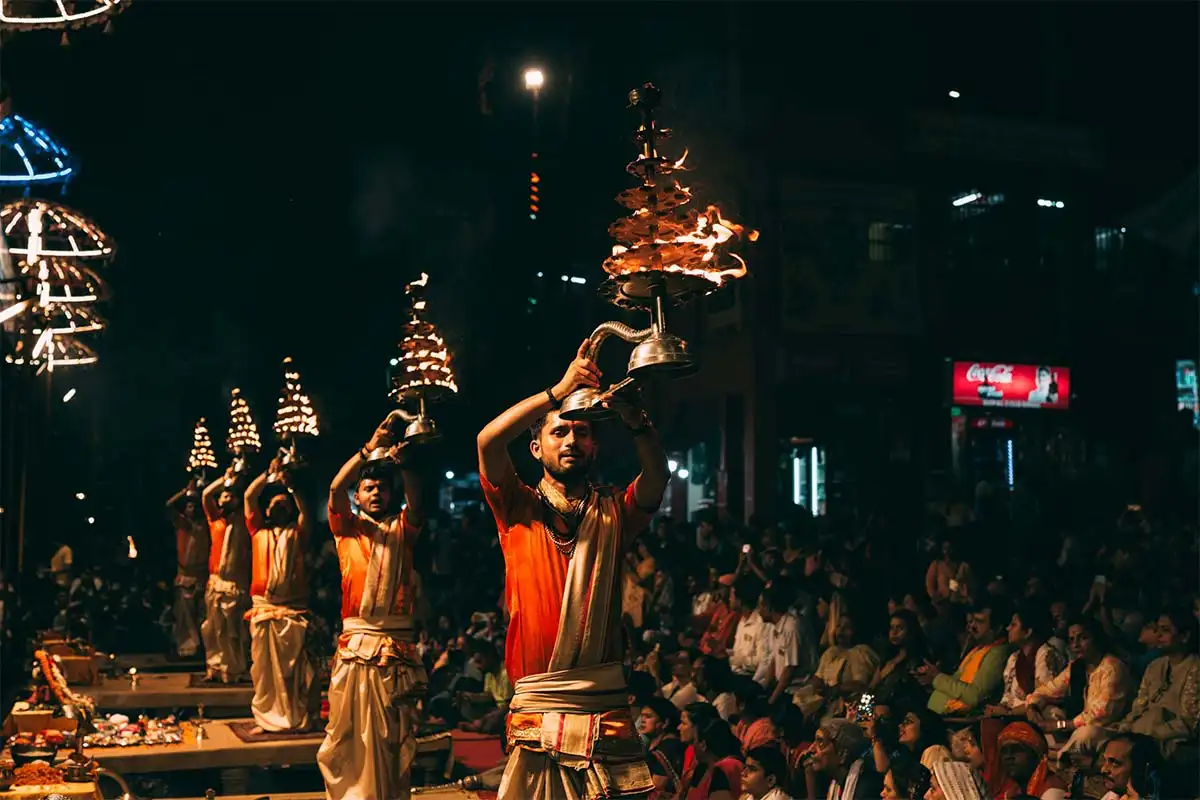
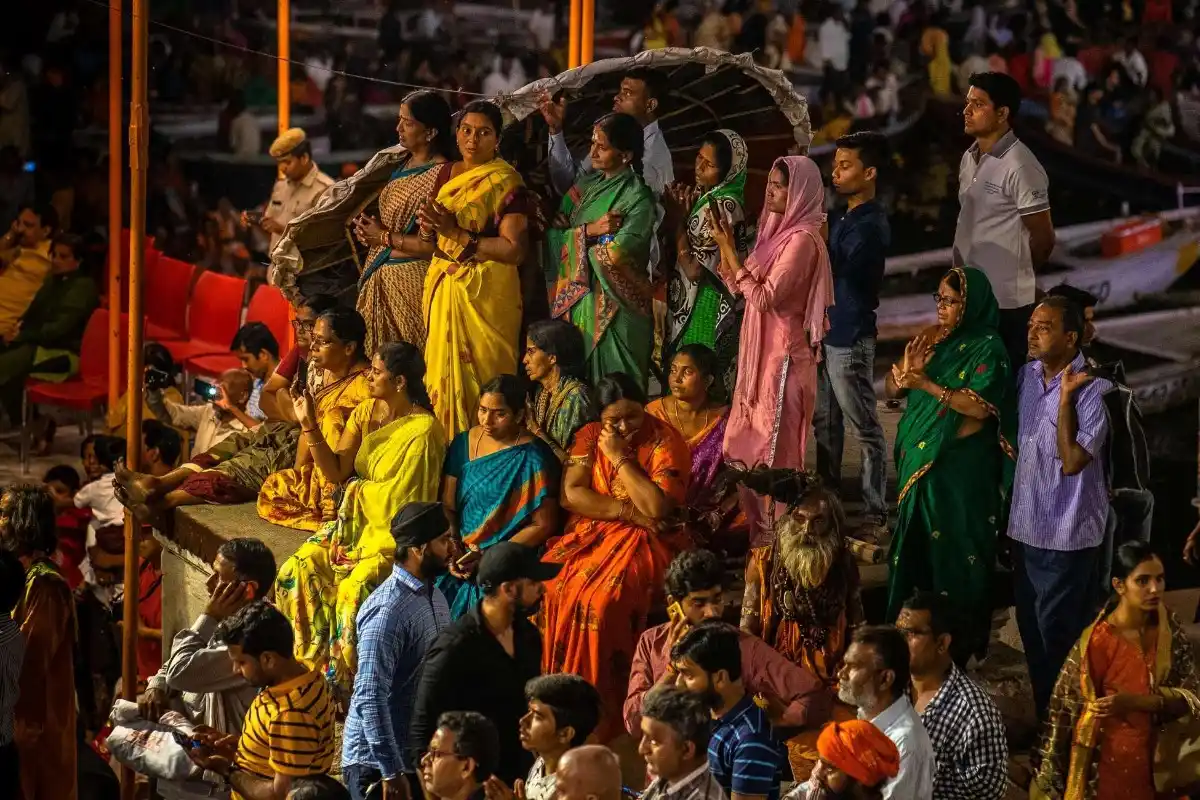
Dashashwamedh Ghat is the most visited. Every evening, priests perform the Ganga Aarti here, a fire ceremony offered to the river itself. Flames move in rhythm, bells ring, and crowds gather on the steps and in boats on the water.
Assi Ghat offers a quieter version each morning, known locally as Subah-e-Banaras. If you’d rather skip the evening crowd, this sunrise version is worth waking up early for.
Masan Holi: Where Death and Celebration Meet
Varanasi celebrates Holi differently than the rest of India. A few days before the main festival, the city holds Masan Holi at Manikarnika Ghat, one of its oldest cremation grounds.
Here, ash from funeral pyres takes the place of colored powder.
History & Its Belief
Local legend says Lord Shiva brought Goddess Parvati to Kashi on Rangbhari Ekadashi. He then played Holi with everyone in the city, except the spirits who served him. Shiva played Holi with them separately, at the cremation ground, using ash from the pyres instead of color.
Devotees now repeat this ritual every year at Manikarnika and Harishchandra Ghats. Ash replaces gulal as a mark of Shiva’s presence and a symbol of detachment from the material world. It sums up how Varanasi treats death: not something to hide from, but part of everyday life along the river.
Masan Holi is intense and unfamiliar to most first-time visitors, and that’s completely fine. If you’d rather watch respectfully from a distance, our guides can help you experience it without stepping into the ritual itself.
Sarnath: Where Buddhism Began Its Journey
Just 10 kilometres from Varanasi sits Sarnath, one of Buddhism’s four most sacred sites. This is where Buddha gave his first sermon after reaching enlightenment, setting what Buddhists call the Wheel of Dharma in motion.
The Dhamek Stupa marks this spot today, standing 43 metres tall. Nearby stands the remains of Emperor Ashoka’s pillar, the same pillar whose lion capital became independent India’s national emblem.
The site is protected by the Archaeological Survey of India. It maintains the excavated monasteries, stupas, and a museum holding sculptures from the 3rd century BC onward.
Sarnath pairs naturally with a Varanasi visit. Most travelers combine both in a single day, moving from Hindu ritual at the ghats to Buddhist history at Sarnath, all within a short drive.
Varanasi and Ayodhya: Two Cities, One Spiritual Circuit
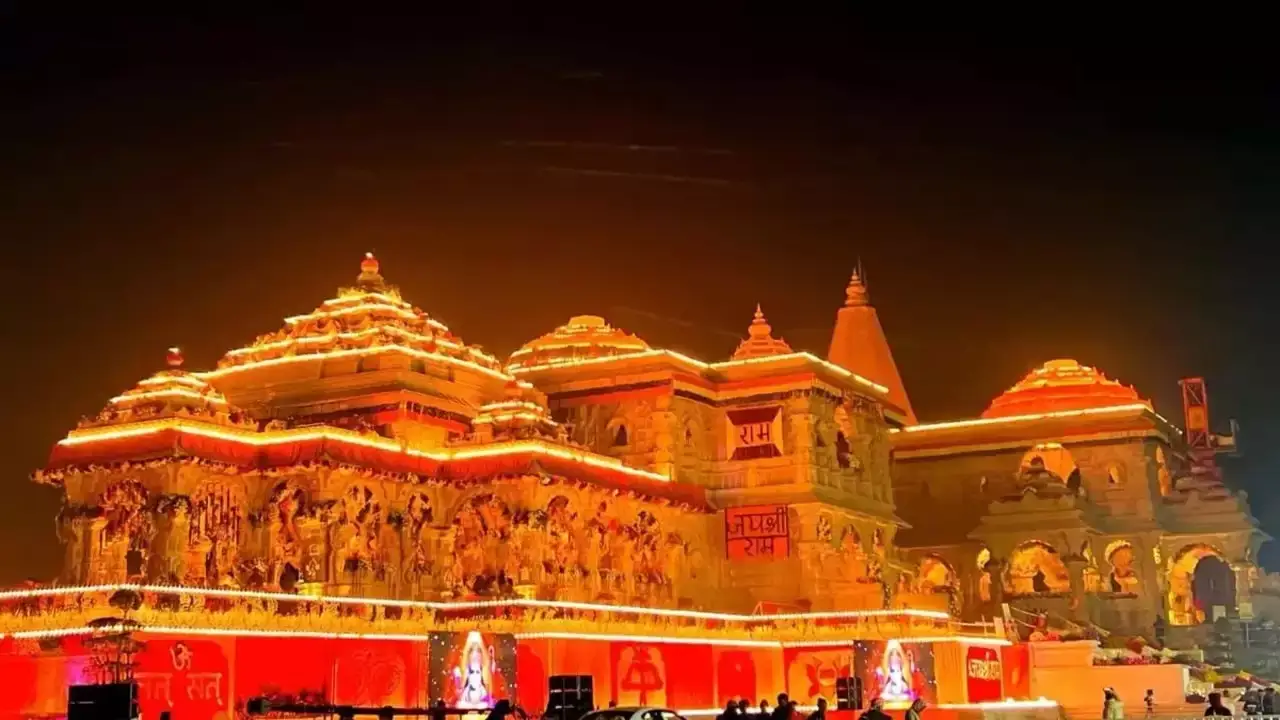
If Varanasi is linked to Lord Shiva, Ayodhya is linked to Lord Rama. Ayodhya is believed to be Rama’s birthplace, and the Ram Janmbhoomi Temple there has become one of India’s most visited pilgrimage sites.
The two cities sit around 200 kilometres apart, roughly four to five hours by road. Ayodhya also has its own airport, Maharishi Valmiki International Airport, named after the sage who wrote the Ramayana.
A Varanasi and Ayodhya Tour lets you cover both sides of this spiritual circuit: Shiva’s city and Rama’s birthplace, in one trip. For pilgrims and history lovers alike, this combination is one of the most requested routes we plan.
We’ve built our Varanasi and Ayodhya Tour with enough time at each stop, so neither city feels rushed. You get the ghats, the temples, and the quieter moments in between.
The Food of Varanasi: A Reason on Its Own
Varanasi’s food scene deserves its own trip. Street food here is treated seriously, and stalls that have run for generations still draw the longest lines.
Start your morning with kachori sabzi, a fried bread served with spiced vegetable curry. Try chaat at one of the old city’s small stalls, where recipes rarely change. Banarasi paan, a betel leaf preparation, is practically a local tradition on its own.
Cool off with a glass of thandai, a spiced milk drink often flavoured with almonds and saffron. Blue Lassi, a tiny shop near the ghats, has served its thick, fruit-topped lassi for decades. Jalebi and kachori for breakfast is a Varanasi habit worth adopting, even for a day.
Food here isn’t separate from the city’s culture. It’s part of it, the same way the ghats and temples are.
Culture Beyond the Temples
Varanasi’s identity goes beyond religion. The city has shaped Indian classical music for centuries. Shehnai maestro Ustad Bismillah Khan, one of India’s most celebrated musicians, spent much of his life here. His influence still runs through the city’s music schools.
Banarasi silk sarees are another local trademark, woven by hand using techniques passed down through generations of weaver families. Many workshops in the old city still work this way, and a visit to see the process is worth adding to your itinerary.
Banaras Hindu University, mentioned earlier for its scholarship, also holds the Bharat Kala Bhavan museum. It houses sculptures, paintings, and manuscripts spanning centuries of Indian art. It’s a quieter stop, away from the ghats, but worth the detour for history lovers.
Getting Around Varanasi
The old city’s lanes are narrow, and cars can’t reach most of them. Walking and cycle rickshaws are the usual way to move around near the ghats.
Auto-rickshaws work well for longer distances, including trips to Sarnath or the airport. We arrange a private vehicle and driver for all of this, so you’re not negotiating fares or directions on your own.
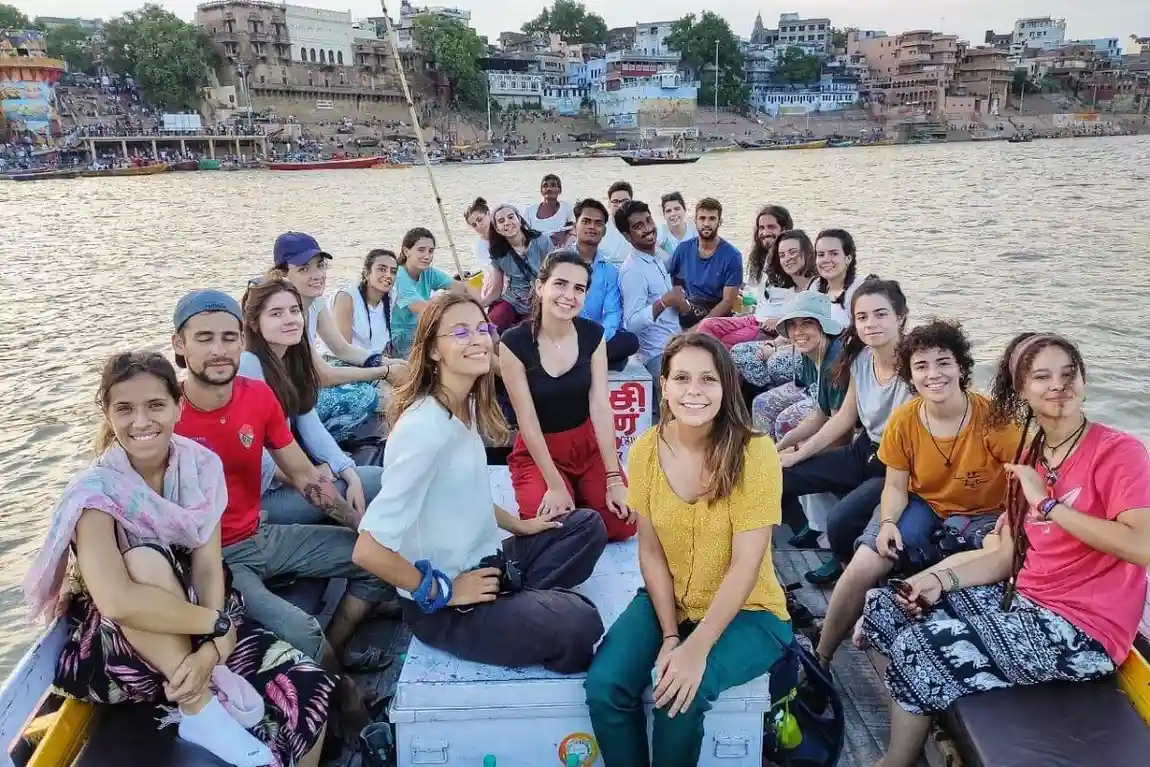
Boats are less a mode of transport here and more an experience. A sunrise or sunset ride along the Ganga is one of the few ways to see all the ghats in a single trip.
Our Varanasi Tour Packages
Every traveler has a different amount of time and a different set of interests. Here’s how our tours are structured to match.
Varanasi Day Tour
If you’re short on time, our Varanasi Day Tour fits it all into a single day. Expect Kashi Vishwanath Temple, the ghats, a boat ride, and the evening Ganga Aarti.
3 Days Varanasi and Sarnath Tour
Our 3 Days Varanasi and Sarnath Tour gives you room to slow down. You’ll cover the ghats at both sunrise and sunset, and spend real time at Sarnath.
Varanasi Tour from Delhi
Traveling from the capital? Our Varanasi Tour from Delhi handles flights or train connections, airport pickup, and a full Varanasi itinerary.
Varanasi and Ayodhya Tour
As covered above, this package combines Shiva’s city with Rama’s birthplace, built for travelers who want India’s spiritual side covered in full.
Golden Triangle Tour with Varanasi
Already planning Delhi, Agra, and Jaipur? Our6 DayGolden Triangle Tour with Varanasi from Delhi adds this spiritual city onto your classic North India route. For a complete circuit, this package fits it all into one well-paced week, including the Taj Mahal, Amer Fort and Qutub Minar before visiting the ghats and temples of Varanasi.
India Spiritual & Heritage Tour
Looking for something broader? Our India Spiritual & Heritage Tour blends temples, monuments, and rituals across multiple cities, with Varanasi as its emotional centre.
Why Book Your Varanasi Tours With Us
Varanasi rewards travelers who have the right guide. The old city’s lanes are narrow and easy to get lost in, and rituals at the ghats carry meaning that’s easy to miss without context.
Our Varanasi Tours are 100% private, with no fixed group and no rushed schedule. Every guide is local, licensed, and used to explaining Hindu and Buddhist customs to travelers seeing them for the first time. Pricing is quoted upfront, with no hidden charges added later.
You can also reach us on WhatsApp, 24/7, before and during your trip. If your Ganga Aarti timing changes or your train gets delayed, someone actually responds.
Private Vehicles Always
No shared minibuses and no waiting for other travellers’ schedules. You get your own car, your own driver, and your own pace every day.
Real flexibility
If you want to skip a museum and spend more time at a market, just let us know. Our itineraries are a starting point, not a fixed plan.
Transparent pricing
Your quote covers exactly what is listed, with no last-minute add-ons and no so-called optional fees that are actually required.
Support that never stops
If your flight is delayed or your plans change late at night, send us a WhatsApp message. We’re here for you any time, any day.
Best Time to Visit Varanasi
October to March is the most comfortable window, with cool mornings that suit early ghat visits and boat rides. Winter mornings can be foggy, so plan sunrise boat rides with some flexibility.
Maha Shivratri, usually in February or March, turns the city into a major festival, given its deep ties to Lord Shiva.
Masan Holi, held days before regular Holi, draws travelers curious about Varanasi’s more unusual rituals.
Dev Deepawali, held on Kartik Purnima in November, is arguably the most spectacular night of the year, when thousands of lamps line every ghat.
Summers, from April to June, run hot and humid. It’s still possible to visit, just plan for early mornings and shaded afternoons.
Yes. Watching the Ganga Aarti from the ghat steps is free. Boat seating for a closer view usually costs extra, and we can arrange this as part of your tour.
Varanasi is roughly 800 kilometres from Delhi. Most travelers fly, a journey of about 90 minutes, though overnight trains are also common and popular with pilgrims.
Masan Holi is a Shiva-linked ritual held at Manikarnika Ghat before regular Holi, using ash instead of colour. Visitors can watch respectfully, and our guides will brief you on timing and etiquette.
Yes, you will find many foreign travelers in Varanasi, from around the world. Ghats and old city lanes get crowded, so we recommend a local guide, included in every WOW Tour Guide package.
Varanasi isn’t a city you rush through. Whether you have one day or five, we’ll build a Varanasi tour around what you actually want to see. Message us on WhatsApp, and let’s plan your trip to Kashi.